01 / PLAN
Keep the starting snapshot
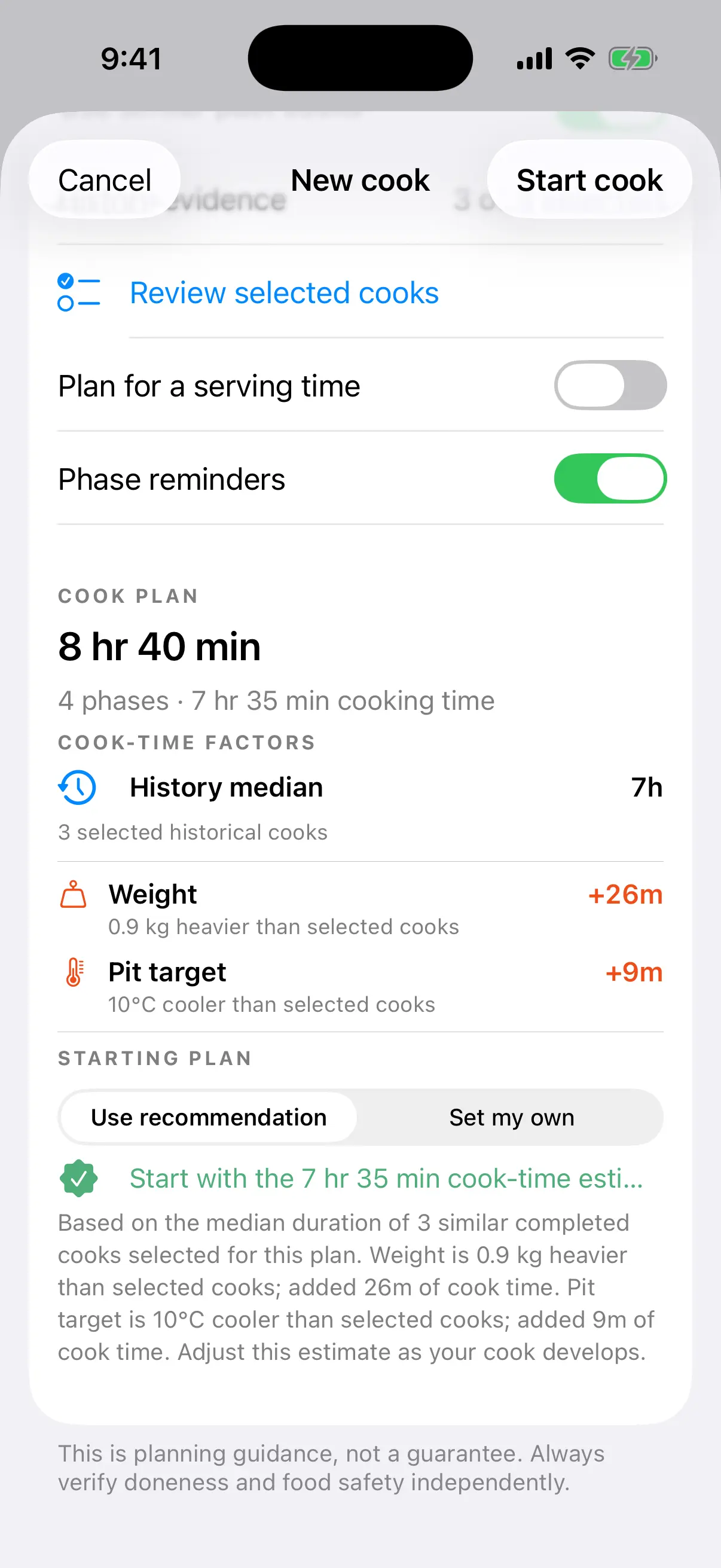
Food, equipment, targets, phases, recommendation and the initial decision stay attached to the record.
 BBQ Replay
REPLAY THE COOK
History is useful when it preserves what was known at the start, what changed and how the result turned out. BBQ Replay keeps those parts distinct and lets you choose the records that should inform another cook.
THE USEFUL PARTS
01 / PLAN
Food, equipment, targets, phases, recommendation and the initial decision stay attached to the record.
02 / ACTUAL
Review duration, events, readings, outcome ratings and next-time notes without overwriting the original plan.
03 / EXPORT
Share a versioned JSON archive or a spreadsheet-friendly CSV summary through an explicit local action.
FIELD NOTES
A long archive is not automatically useful. Better comparisons begin with a question and records that preserve enough context to answer it.
START SNAPSHOT
Keep the chosen food profile, equipment, targets, phases and advisory recommendation with the cook. Later edits should not rewrite that starting point because the difference between the plan and reality is part of the evidence.
FAIR COMPARISON
To examine timing, choose cooks with similar food, weight and equipment. To examine a fire-management change, look for records with the relevant vent, fuel and pit events. Similar names alone do not make two cooks comparable.
PORTABLE RECORD
Versioned JSON keeps a structured terminal history archive, while CSV gives you a spreadsheet-friendly summary. Export is an explicit local action, and neither format should be mistaken for a live sync service or an automatic cloud backup.
A useful replay ends with one testable change for next time, not a vague promise to cook it better.
COOKING BOUNDARY
Time and temperature guidance is advisory. Verify food safety and doneness independently using appropriate guidance, your equipment, and your own judgement.
RELATED FIELD NOTE