01 / READINGS
Log pit and food temperatures
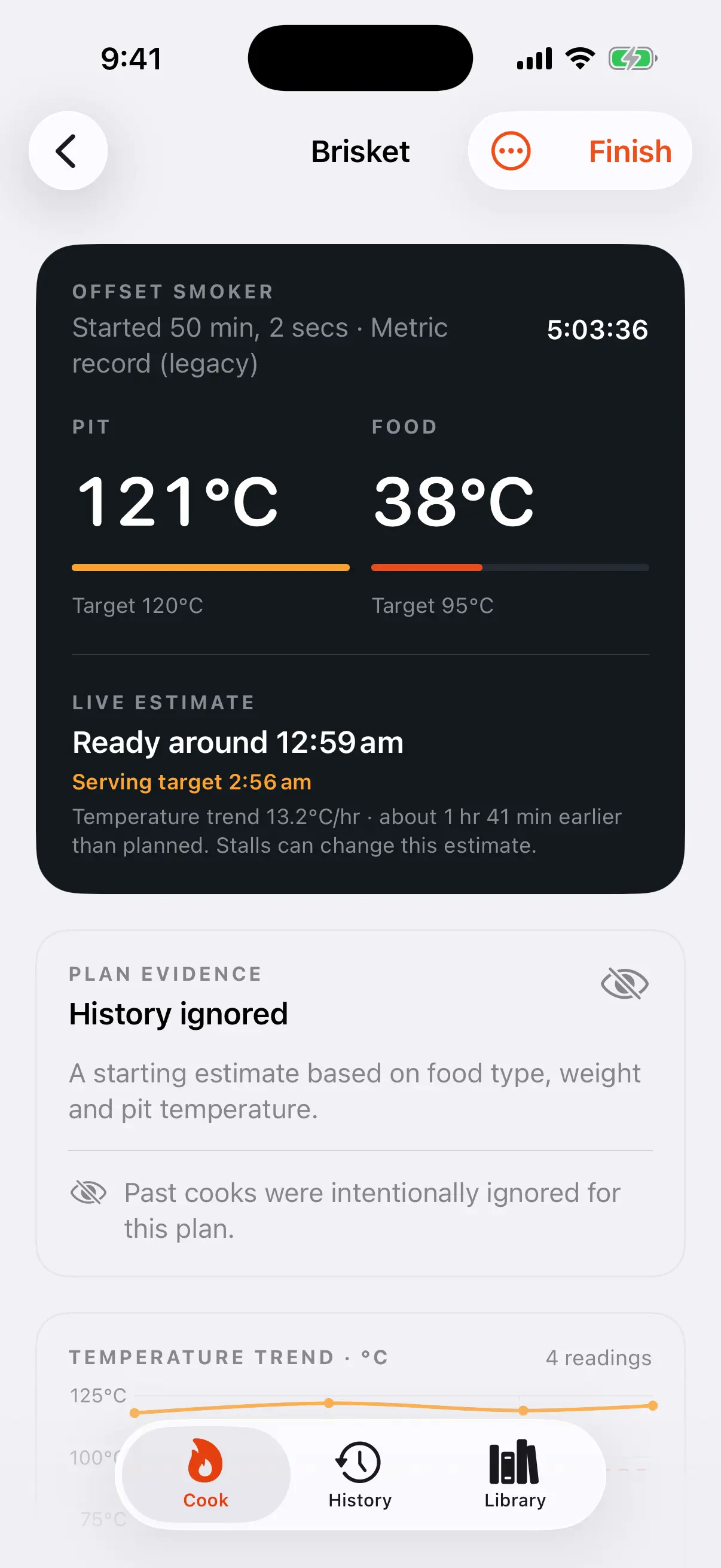
Attach a manual reading to the right cook, food item and probe label so separate meats do not become one confusing line.
 BBQ Replay
KEEP THE CONTEXT
A final temperature rarely explains a cook. BBQ Replay keeps manual readings beside the phase and event that changed the trend, then shows the record in history without pretending missing data was captured.
THE USEFUL PARTS
01 / READINGS
Attach a manual reading to the right cook, food item and probe label so separate meats do not become one confusing line.
02 / EVENTS
Keep meaningful lid, fuel, vent, wrap, move and phase events together with the time they happened.
03 / TREND
Review pit and food trends and a bounded finish estimate only after there is enough useful evidence.
FIELD NOTES
The best log is light enough to use during the cook and specific enough to explain the result after the fire is out.
SETUP
Record the food, weight, cooker, fuel approach, pit target and planned phases before the cook becomes busy. This creates a stable starting snapshot instead of asking you to reconstruct the setup from memory later.
MEANINGFUL EVENT
A pit or food reading is most useful beside a vent change, fuel addition, wrap, move or phase change. You do not need a number every minute. You need enough evidence to understand the direction and the decisions around it.
OUTCOME
Add the actual duration, result rating and one clear next-time note. That final observation gives future comparisons a purpose and keeps a technically complete log from becoming an unexplained list of temperatures.
BBQ Replay preserves missing legacy details as not recorded instead of inventing certainty that was never captured.
COOKING BOUNDARY
Time and temperature guidance is advisory. Verify food safety and doneness independently using appropriate guidance, your equipment, and your own judgement.
RELATED FIELD NOTE